Mesure Wealth Distribution with the Affluency Index Tool

Track economic prosperity and analyze regional wealth trends

Location’s Affluency Index

Definition

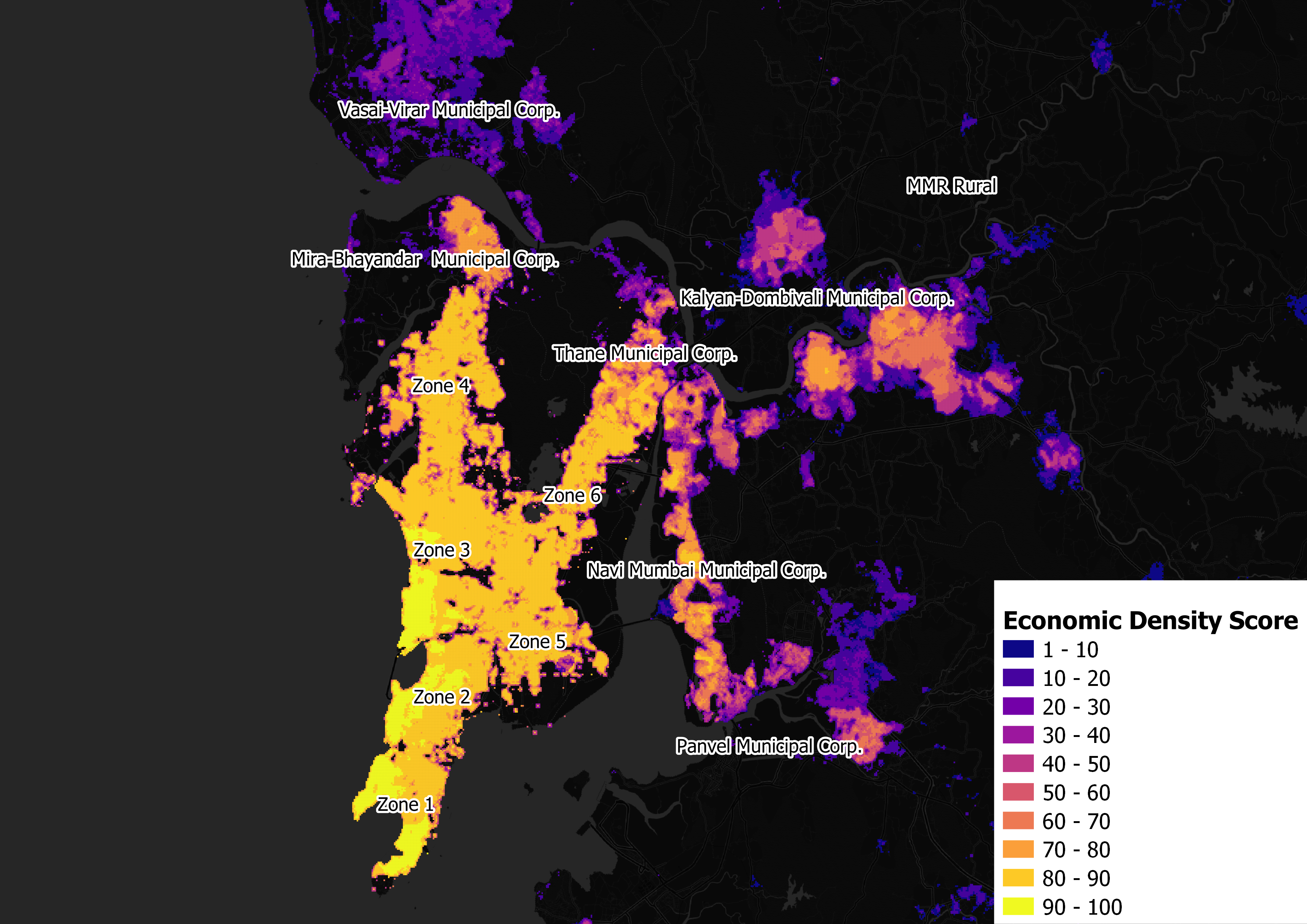
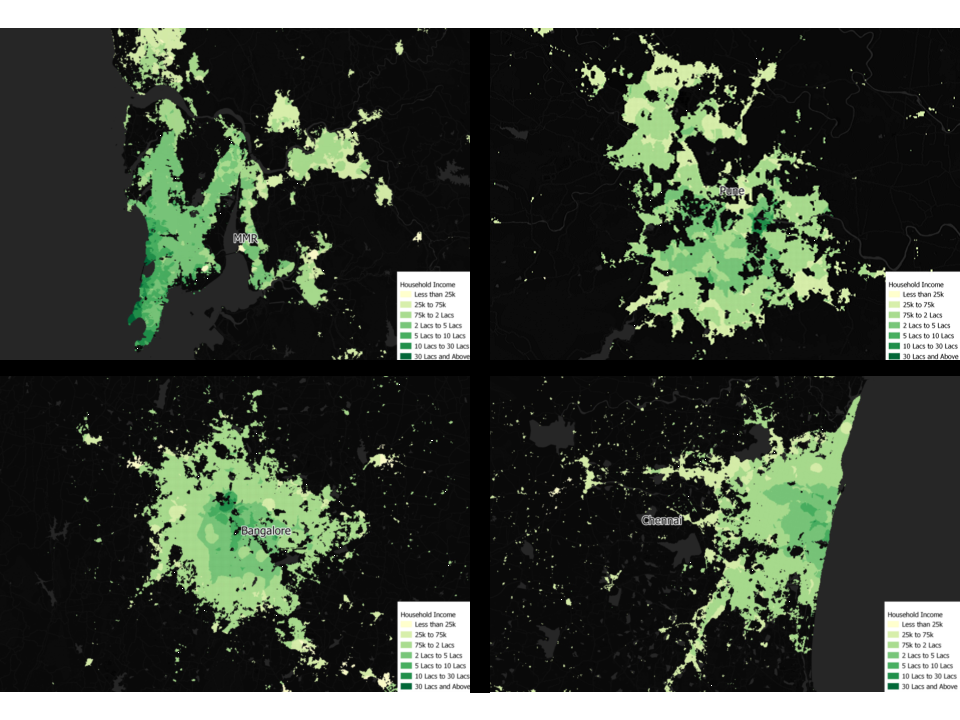
Location and neighborhood quality are critical determinants of real estate investment value. The Affluency Index (also known as the Economic Density Index ) represents the quality of a location based on the density and income level of its population.

Formula

Affluence Index

Population Density

Income

This index captures how both population concentration and income levels define the character of an area:
  • "Undeveloped areas " Low population density and low affluence.
  • "Developed areas " High density but varying income levels
  • "Posh localities " High density of high-income residents
  • "Lower-grade areas" High density of lower-income residents
Since access to infrastructure and amenities correlates with demographic wealth, the Affluency Index acts as a single, comprehensive measure of location quality.

Computation Method

  • Reflects price appreciation driven by inflation and current market pricing.
    • Grid Mapping – The city is divided into 100m × 100m grids.
    • Land Use Classification – Machine learning algorithms identify land use types such as open areas, roads, water bodies, built-up areas, and green spaces.
    • Population Projection – Ward-level population data is mapped to each grid based on housing density.
    • Property Value Estimation – Real estate prices and rentals estimate average house value. Regression models fill in missing price and size data.
    • Income Estimation – The average household value and income are calculated for each grid to derive the Affluence Index.

Affluency Index Scale

Affluence Category Min Range Max Range Approx. Household Cost
Low 0 0.002857 Below ₹40 Lakh
Mid 0.002857 0.008571 ₹40–80 Lakh
Upper Mid 0.008571 0.018571 ₹80 Lakh–1.5 Cr
High 0.018571 0.04 ₹1.5–3 Cr
Affluent 0.04 0.111429 ₹3–8 Cr
Extremely Affluent 0.111429 1 Above ₹8 Cr